Mako assisted
Revision total knee replacement.
Revision knee replacement is performed when a previous knee replacement is no longer functioning satisfactorily and one or more components need to be removed, repaired or replaced.
Overview
It is a more complex operation than a first knee replacement. Scar tissue, altered anatomy and possible bone loss all make it harder, and the reconstruction often requires specialised implants that were not needed the first time.
Dr John Limbers’ fellowship training in hip and knee replacement was undertaken at Addenbrooke’s University Hospital in Cambridge and Cappagh National Orthopaedic Hospital in Dublin, both high-volume centres where complex and revision knee work is concentrated. Revision knee surgery has remained part of his practice since, alongside a primary knee replacement practice of more than 5,000+ joint replacements.
A painful knee replacement is not automatically an indication for revision. Working out why it hurts is the substance of the assessment, and revision performed without a clear diagnosis frequently does not solve the problem.
Why might a knee replacement need revising?
- Aseptic loosening of one or more components
- Wear or damage to the polyethylene bearing
- Instability or recurrent giving way
- Persistent stiffness or loss of movement
- Infection around the joint replacement
- Fracture around the implant
- Malposition or mechanical problems
- Progressive bone loss
- Pain that has been carefully investigated and linked to a correctable cause
Symptoms can also arise from the hip, spine, tendons, nerves or other medical conditions, so thorough investigation is essential.
When should a knee replacement be reviewed?
- Pain that never settled after the original surgery
- New pain in a knee replacement that had been comfortable
- Swelling, warmth or redness
- Any wound discharge, at any time after surgery
- The knee giving way or feeling unstable
- Progressive loss of movement
- Reduced walking distance after a period of doing well
Any wound discharge after joint replacement should be reported the same day.
How is it assessed?
Dr Limbers reviews the original operation, implant details, symptom pattern, examination and previous imaging. Investigations may include weight-bearing X-rays, CT, blood tests, nuclear imaging or joint aspiration where infection is a concern.
Infection must be identified or excluded before any revision is planned, because it changes the entire treatment plan.
What does the procedure involve?
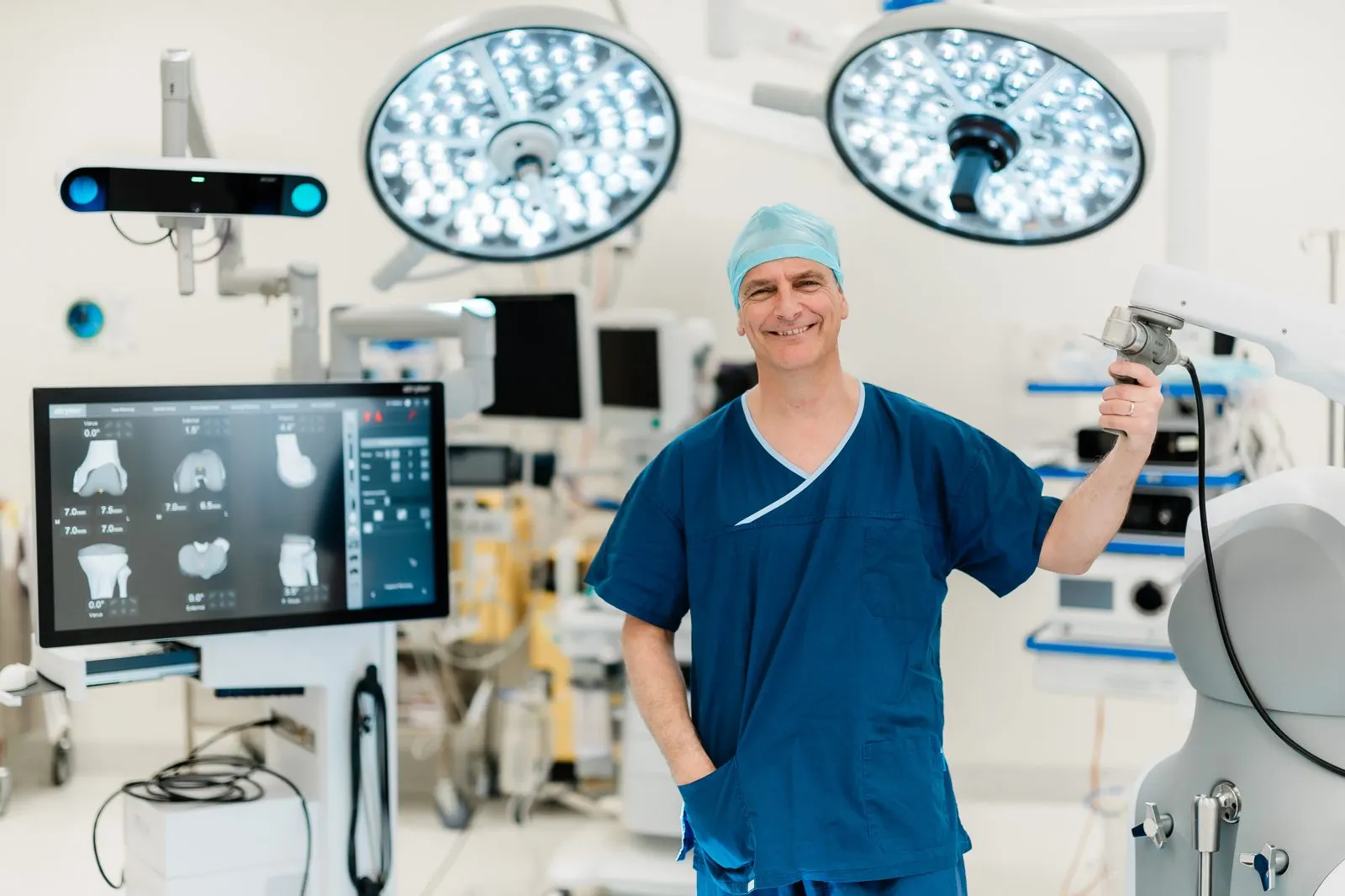
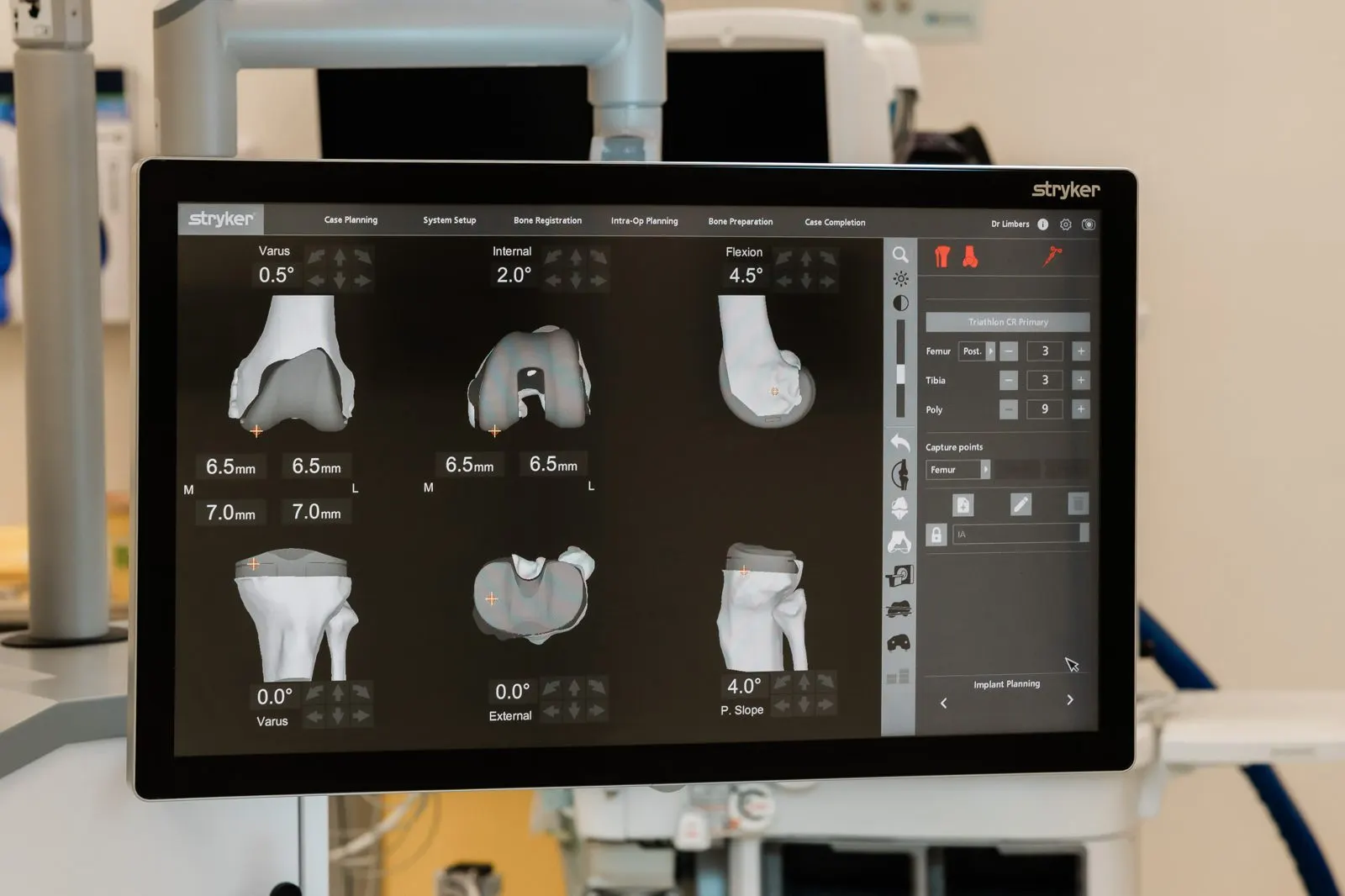
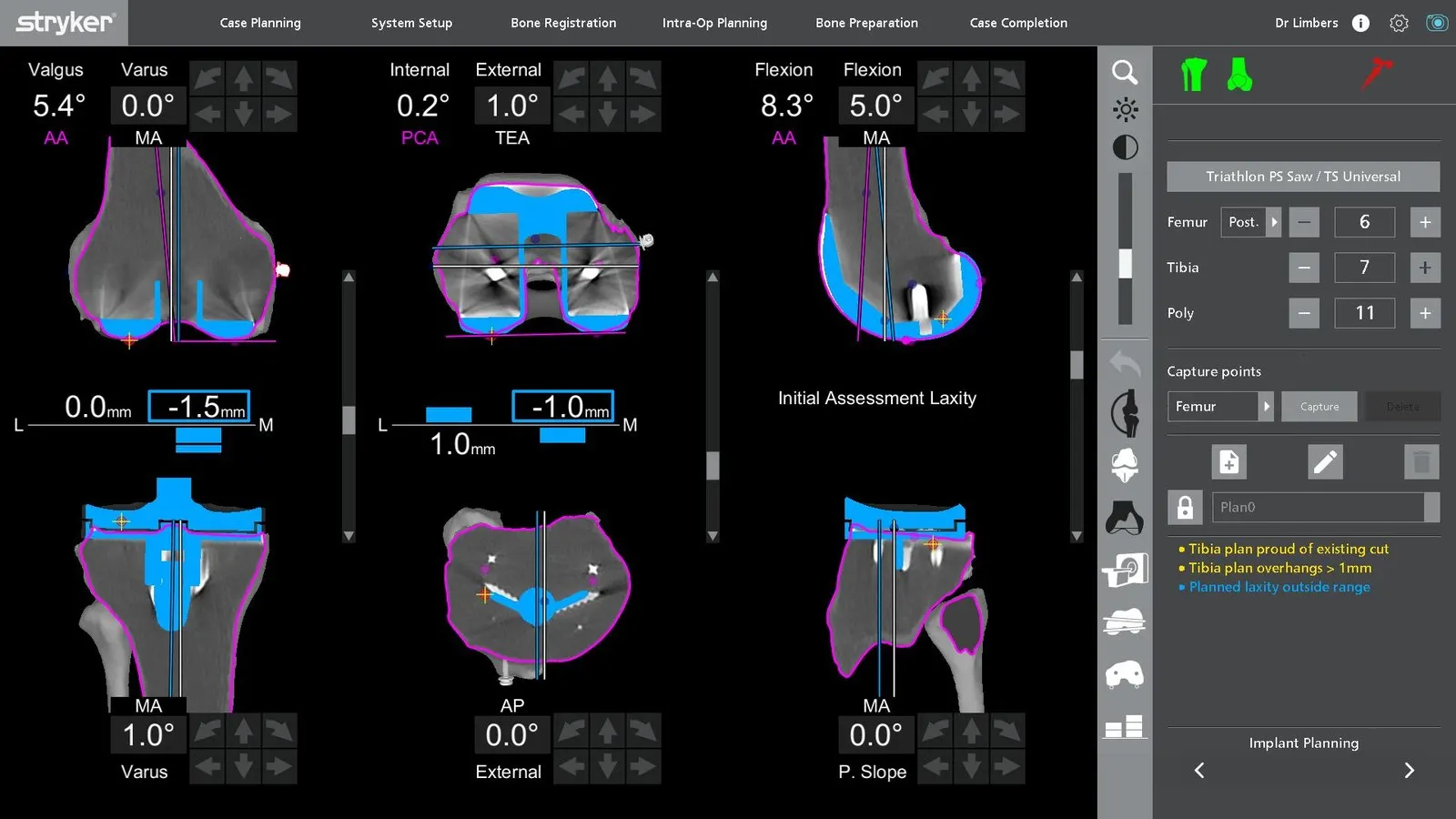
Revision may involve replacing a single component or removing the entire knee replacement. The procedure starts with a CT scan before surgery, with a virtual revision total knee replacement being planned. During the procedure the patient’s anatomy and existing total knee replacement are registered, thus matching the patient’s anatomy to the plan. The revision total knee replacement plan is then modified to produce a well-balanced revision total knee replacement. Scar tissue is released as required and failed implants carefully removed. The remaining bone is then prepared under robotic control. Bone defects may need reconstruction using specialised revision components, stems, cones, augments or bone graft.
The final reconstruction is selected to provide stability while preserving as much remaining bone as possible. Infection-related revisions may require more than one operation.
What is recovery like?
Recovery is usually slower and less predictable than after a first knee replacement. Hospital stay, mobility aids and rehabilitation requirements depend on the complexity of the reconstruction, bone quality and general health.
Expect swelling, weakness and a gradual return of movement. Weight-bearing may occasionally be restricted, although most patients can walk with assistance soon after surgery.
Rehabilitation after revision knee replacement is individualised rather than protocol-driven, because what is safe depends on how much bone was reconstructed and how the implants are fixed. Dr Limbers provides instructions covering weight-bearing, movement and progression at discharge, and those instructions take precedence over any general guide.
What are the risks?
Revision surgery carries higher risks than primary knee replacement, including infection, fracture, blood clots, stiffness, instability, nerve or blood vessel injury, wound problems, persistent pain, recurrent loosening and the need for further surgery.
The objective is generally to address a defined mechanical, infectious or implant-related problem. The revised knee may not feel or function like a normal knee, particularly where there has been significant bone or soft-tissue damage.
Mako planning
How may Mako assist?
CT-based robotic planning helps define current component position, remaining bone and the intended reconstruction, and assists with planning implant alignment and executing selected bone preparation.
How Mako is used depends on the existing implants, the reason for revision and the complexity of the case. Some stages of revision surgery remain conventional and require direct surgical judgement.
Point of difference
Why Dr Limbers for revision knee replacement.
Revision knee replacement performed within a hip and knee focused practice
Selected use of CT-based robotic planning in revision surgery
Fellowship training at two high-volume international centres where revision work is concentrated
Key orthopaedic surgical experience
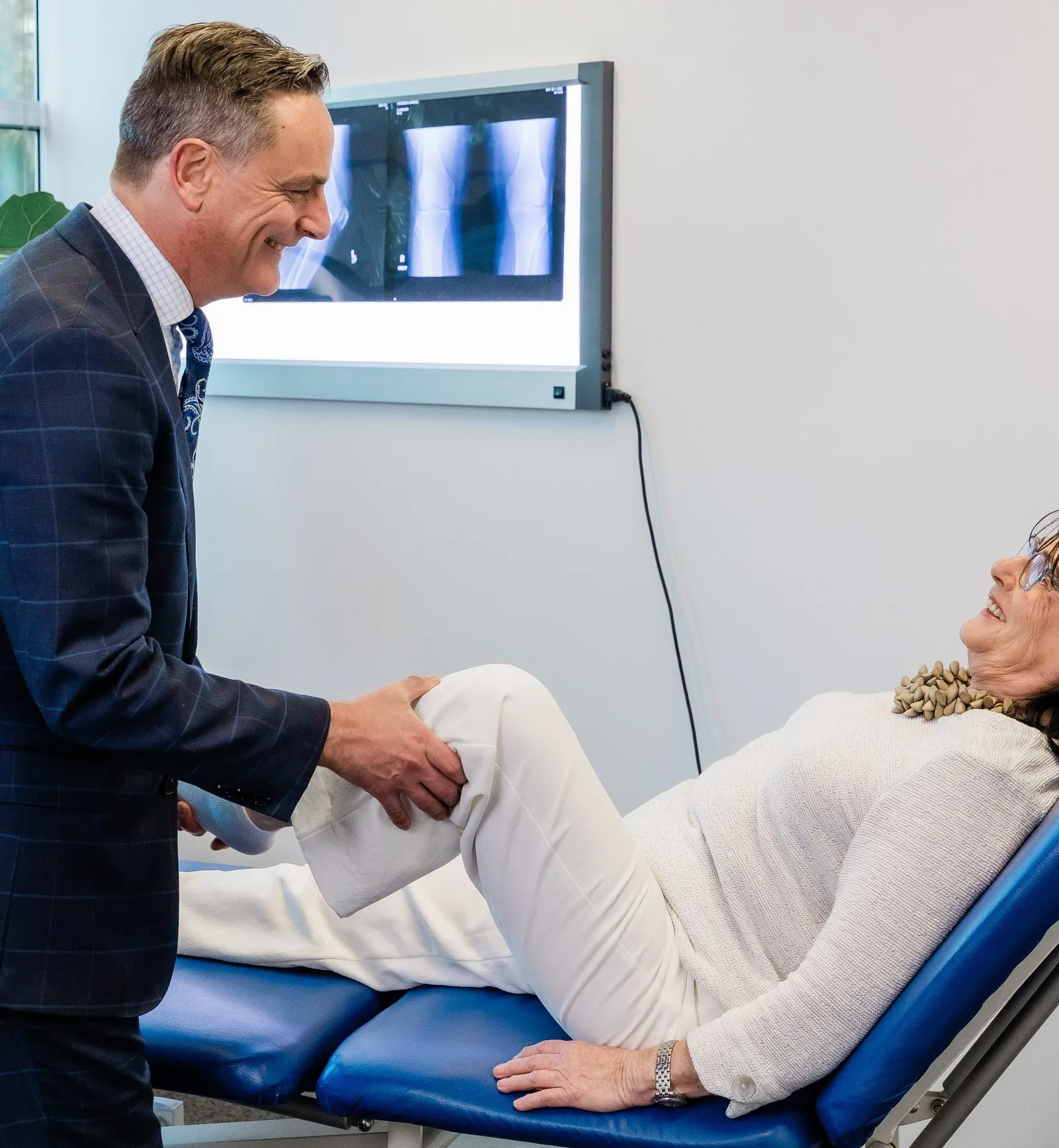
Dr Limbers’ fellowship training was undertaken at two international centres with a high volume of hip and knee replacement, including complex and revision work. He has since completed more than 5,000+ hip and knee replacements over a 25+ year career, including more than 3,000+ using Mako robotic-arm assisted technology. He is also a contributor to the RASKAL trial, the Australian registry-nested randomised trial of robotic-assisted knee replacement — which means the judgement he brings to a failing knee replacement is informed by the evidence base as well as by volume. Because his practice is confined to hip and knee arthritis and joint replacement, revision knee work sits alongside a high volume of primary knee surgery. Working out why a knee replacement has failed depends heavily on knowing what a well-functioning one looks and feels like. Dr Limbers accepts referrals for patients who may require revision knee replacement even when the original knee replacement was performed by another surgeon. His experience includes approximately 100 revision knee replacement procedures.
Read moreRead less
Common questions
Revision knee replacement, answered.
Does a painful knee replacement always need revision?
No. Many causes of pain after knee replacement are not corrected by revision surgery, and some originate outside the knee. Establishing the cause is the priority.
Will my revision knee feel normal?
Outcomes after revision are less predictable than after a first replacement. The usual aim is a stable, less painful knee rather than one that feels new.
Can revision surgery be done robotically?
In the majority of cases. It depends on the existing implants, the reason for revision and how much bone remains.
Last reviewed October 2026
Sources3 references
- Australian Orthopaedic Association National Joint Replacement Registry (AOANJRR); Revision procedures: https://aoanjrr.sahmri.com
- Healthdirect; Knee replacement: https://www.healthdirect.gov.au/knee-replacement
- Australian Commission on Safety and Quality in Health Care; Prosthetic joint infection: https://www.safetyandquality.gov.au
Book an Appointment Today
If hip or knee pain is impacting your quality of life, Dr Limbers can assess whether joint replacement or another treatment option is appropriate for you.
Appointments are available at Wahroonga on the North Shore, and at North Gosford and Kanwal on the Central Coast. A current referral is generally requested and allows eligible Medicare patients to claim the relevant rebate.