Mako assisted
Partial knee replacement.
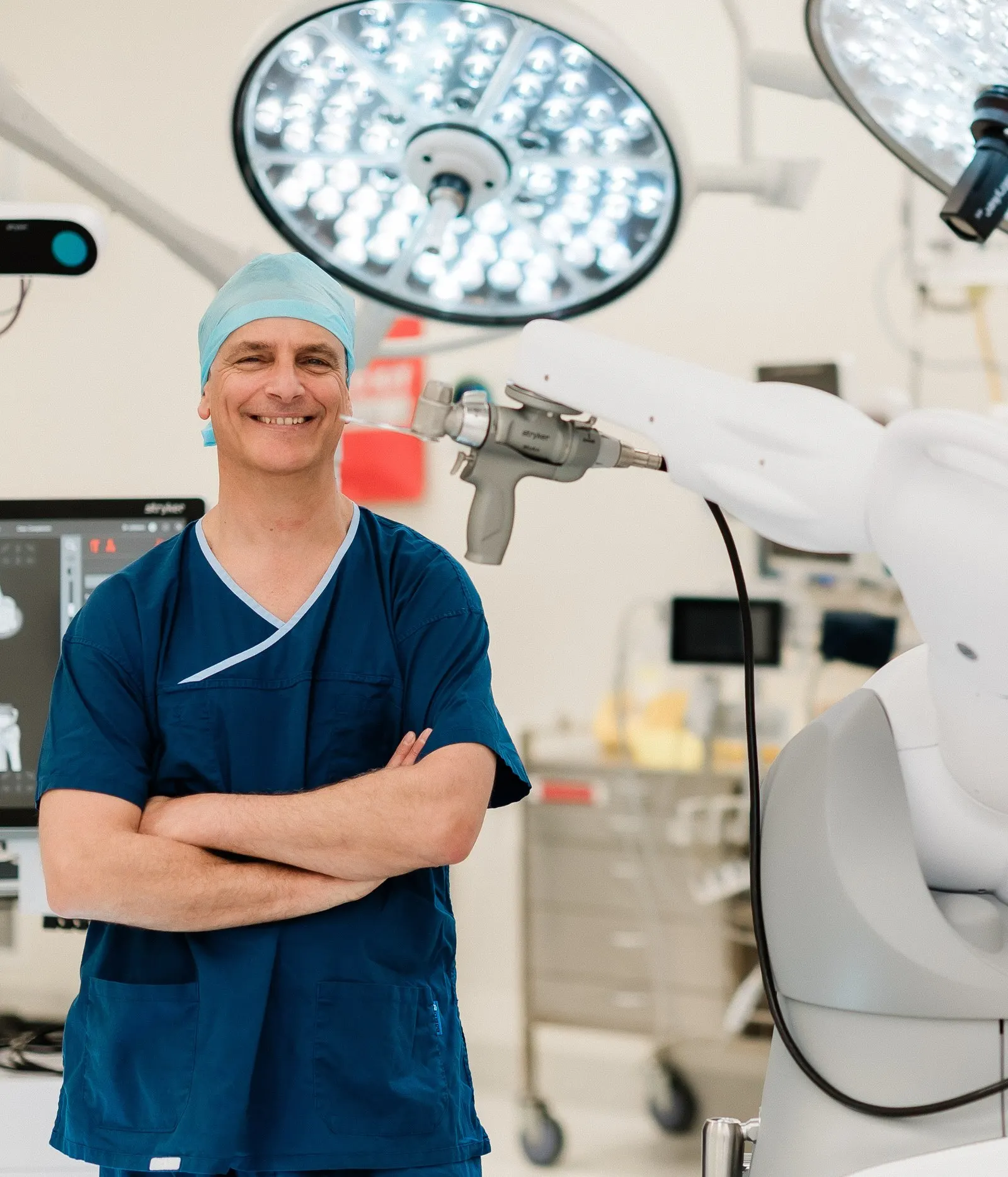
Mako partial knee replacement, also called unicompartmental knee replacement, replaces only the part of the knee affected by arthritis. The healthy compartments, the cruciate ligaments and as much normal bone as possible are preserved.
Overview
Not every arthritic knee needs a full knee replacement.
The knee has three compartments — the inner (medial), the outer (lateral), and the joint between the kneecap and thigh bone. In some people arthritis affects only one, usually the inner compartment, while the rest of the knee and the ligaments remain healthy.
Mako partial knee replacement, also called unicompartmental knee replacement, replaces only the part of the knee affected by arthritis. The healthy compartments, the cruciate ligaments and as much normal bone as possible are preserved.
Who is suitable for a partial knee replacement?
Patient selection is the critical factor, and the suitable group is genuinely narrower than for total knee replacement.
Partial knee replacement may be considered when arthritis is confined to one compartment, most commonly the medial compartment, and the remaining joint surfaces and key ligaments are sufficiently healthy.
It is generally not suitable where arthritis affects more than one compartment, where the anterior cruciate ligament is deficient, where there is significant fixed deformity, or in some inflammatory arthritis.
Symptoms, examination findings and imaging all matter. Some patients who appear suitable on an X-ray have more widespread disease or ligament damage that makes total knee replacement a better option.
Partial vs. total knee replacement
A partial knee replacement is a smaller operation because only one part of the joint is resurfaced. Because the cruciate ligaments are preserved, the knee retains more of its natural movement pattern than after a total knee replacement, where one or both cruciates are removed. Early recovery can be quicker in appropriately selected patients.
The trade-off is important to understand. Australian and international registry data consistently show a higher revision rate for partial knee replacement than for total knee replacement. One contributing factor is that conversion of a partial replacement to a total replacement may be considered at a lower threshold than a major revision of a total knee replacement. Even so, the difference in revision rates is genuine and should form part of the decision.
Arthritis may also develop in another compartment over time, which is the other reason a partial replacement may later need converting.
Why does robotic assistance matter particularly here?
Partial knee replacement is technically demanding. The implants are smaller, the margins of error are finer and only part of the joint is being resurfaced. Accurate component positioning and careful patient selection are therefore important to the result.
Mako can be particularly useful in this setting because the CT-based plan defines the limited area of bone to be prepared and helps the surgeon reproduce the intended implant position while preserving the unaffected parts of the knee.
How is Mako used?
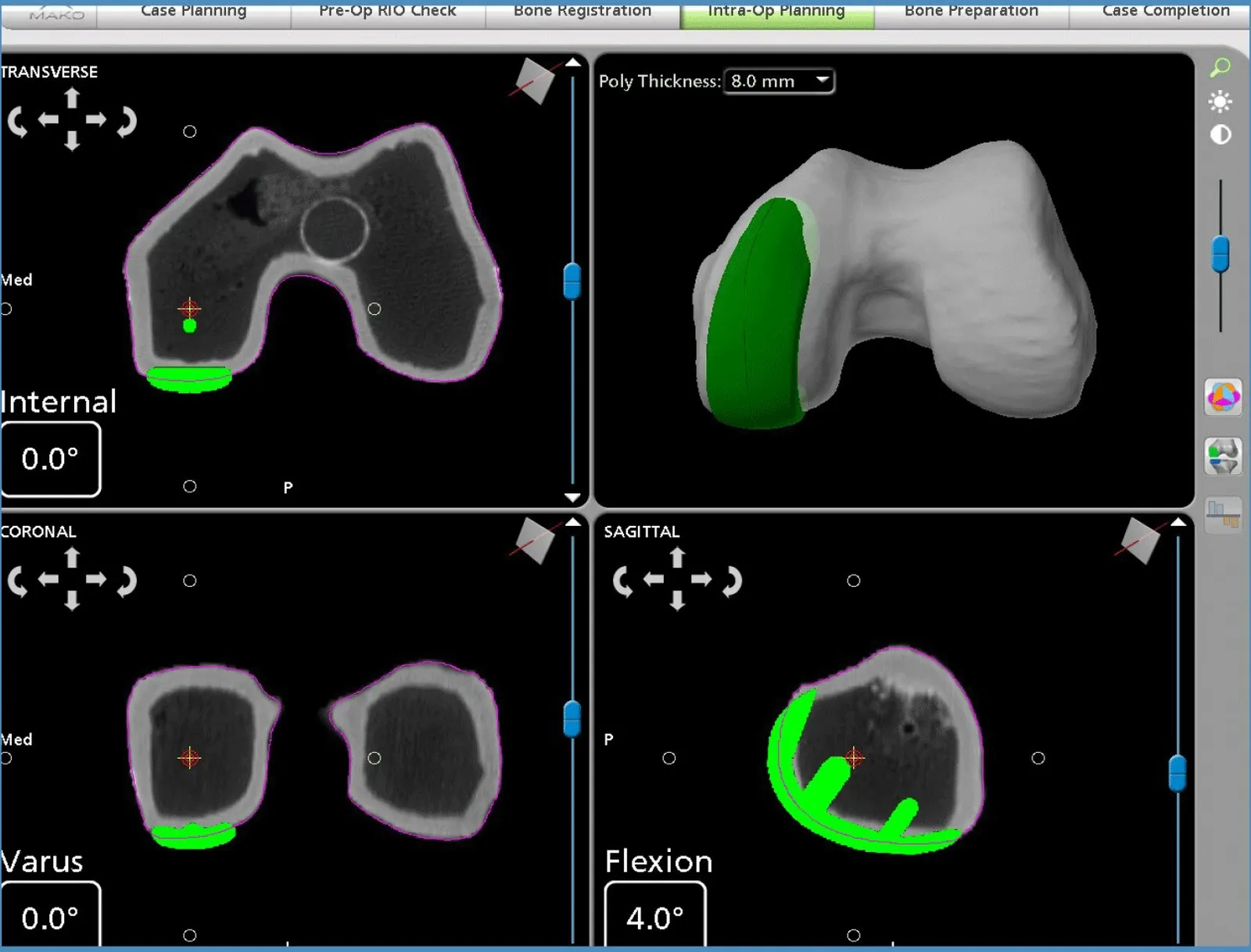
A Mako-protocol CT scan is used to create a three-dimensional model of the knee. Dr Limbers plans the implant size and position and assesses how much bone needs to be removed from the affected compartment.
During surgery, knee movement and ligament tension are assessed and the plan can be refined so the new components work with your remaining natural joint surfaces and ligaments.
How is the procedure performed?
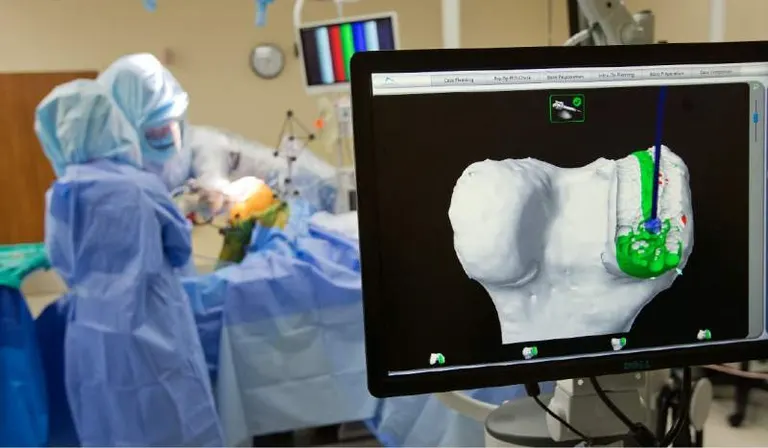
Through a smaller incision, Dr Limbers exposes the affected compartment while preserving the unaffected parts of the knee. Your anatomy is registered to the Mako system and the plan confirmed. The robotic arm assists with precise preparation of the damaged bone within the planned boundaries. Trial components are assessed for movement, stability and balance before the final implants are secured.
What are the potential advantages?
- Preservation of unaffected bone and joint surfaces
- Retention of the cruciate ligaments
- A smaller operation than total knee replacement
- Patient-specific CT-based planning
- Precise preparation of a limited area of bone
- Potential for a more natural-feeling knee in suitable patients
What is recovery like?
Patients are usually encouraged to stand and walk shortly after surgery. Recovery can be quicker than after total knee replacement, though this varies, and swelling, discomfort and weakness are still expected during the early weeks.
Rehabilitation focuses on knee movement, quadriceps strength, balance and progressive walking.
What are the risks?
Infection, blood clots, stiffness, persistent pain, fracture, implant loosening or wear, progression of arthritis elsewhere in the knee, nerve or blood vessel injury, and the need for revision or conversion to total knee replacement.
Your recovery
What recovery is like.
After surgery
Patients are usually encouraged to stand and walk shortly after surgery.
The early weeks
Recovery can be quicker than after total knee replacement, though this varies, and swelling, discomfort and weakness are still expected during the early weeks.
Rehabilitation
Rehabilitation focuses on knee movement, quadriceps strength, balance and progressive walking.
The evidence
Why robotic assistance matters particularly here.
Partial knee replacement is technically demanding. The implants are smaller, the margins of error are finer and only part of the joint is being resurfaced. Accurate component positioning and careful patient selection are therefore important to the result.
Mako can be particularly useful in this setting because the CT-based plan defines the limited area of bone to be prepared and helps the surgeon reproduce the intended implant position while preserving the unaffected parts of the knee.
Australian and international registry data consistently show a higher revision rate for partial knee replacement than for total knee replacement. One contributing factor is that conversion of a partial replacement to a total replacement may be considered at a lower threshold than a major revision of a total knee replacement. Even so, the difference in revision rates is genuine and should form part of the decision.
Point of difference
Why Dr Limbers for partial knee replacement.
Partial knee replacement performed with Mako robotic assistance
Careful assessment of suitability, since patient selection is the main determinant of outcome
More than 3,000+ Mako robotic procedures performed
Key orthopaedic surgical experience
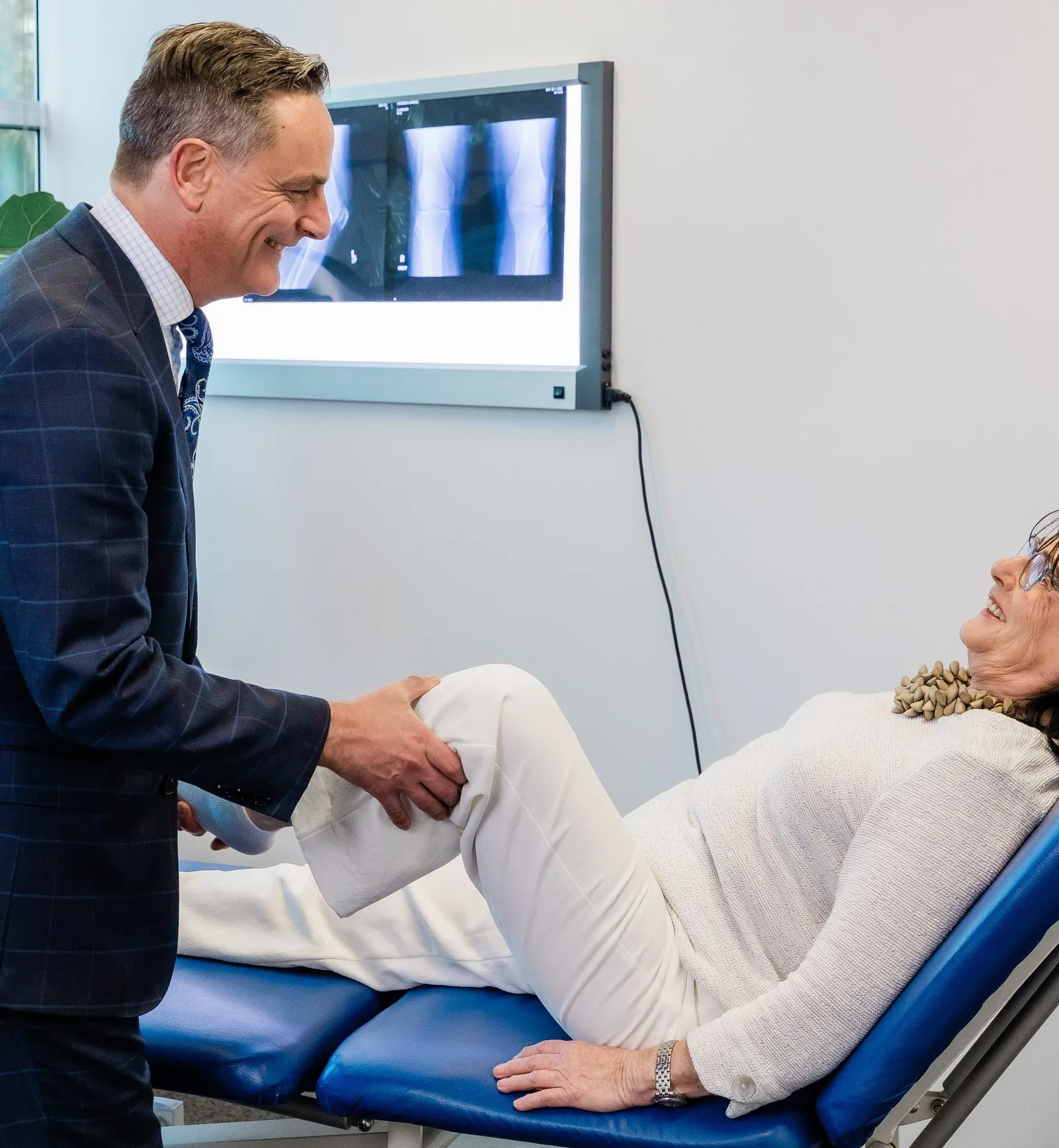
Partial knee replacement forms part of Dr Limbers’ knee practice and is offered selectively when assessment confirms that arthritis is confined to a single compartment and the supporting ligaments are suitable. It represents a relatively small proportion of his overall knee replacement work because he reserves the operation for patients who meet these specific criteria. Dr Limbers is trained and experienced in Mako robotic partial knee replacement and offers it where it is the most appropriate option for the individual knee.
Read moreRead less
Common questions
Partial knee replacement, answered.
Can both sides of the knee be treated with partial replacement?
Partial knee replacement is intended for disease confined to a particular compartment. More widespread arthritis is generally treated with total knee replacement.
Can a partial knee replacement later be revised?
Yes. If the implant fails or arthritis progresses, revision surgery may be required, usually involving conversion to a total knee replacement. Conversion is less complex than some other revision procedures and is routinely undertaken utilising robotic technology. Recent studies have shown results similar to primary total knee replacement surgery.
Is a partial knee replacement better than a total?
Neither is better in general — they suit different knees. A partial replacement preserves more of your own knee and often recovers faster, but carries a higher revision rate in registry data and only suits single-compartment arthritis.
How do I know which one I need?
Assessment of your symptoms, examination and imaging determines which compartments are affected and whether the ligaments are intact. In some cases the final decision is confirmed during surgery.
Last reviewed October 2026
Sources4 references
- Australian Orthopaedic Association National Joint Replacement Registry (AOANJRR); Knee arthroplasty outcomes: https://aoanjrr.sahmri.com
- Australian Commission on Safety and Quality in Health Care; Osteoarthritis of the Knee Clinical Care Standard: https://www.safetyandquality.gov.au
- Healthdirect; Knee replacement: https://www.healthdirect.gov.au/knee-replacement
- Australian Institute of Health and Welfare (AIHW); Osteoarthritis: https://www.aihw.gov.au/reports/musculoskeletal-conditions/osteoarthritis
Book an Appointment Today
If hip or knee pain is impacting your quality of life, Dr Limbers can assess whether joint replacement or another treatment option is appropriate for you.
Appointments are available at Wahroonga on the North Shore, and at North Gosford and Kanwal on the Central Coast. A current referral is generally requested and allows eligible Medicare patients to claim the relevant rebate.