Mako assisted
Anterior total hip replacement.
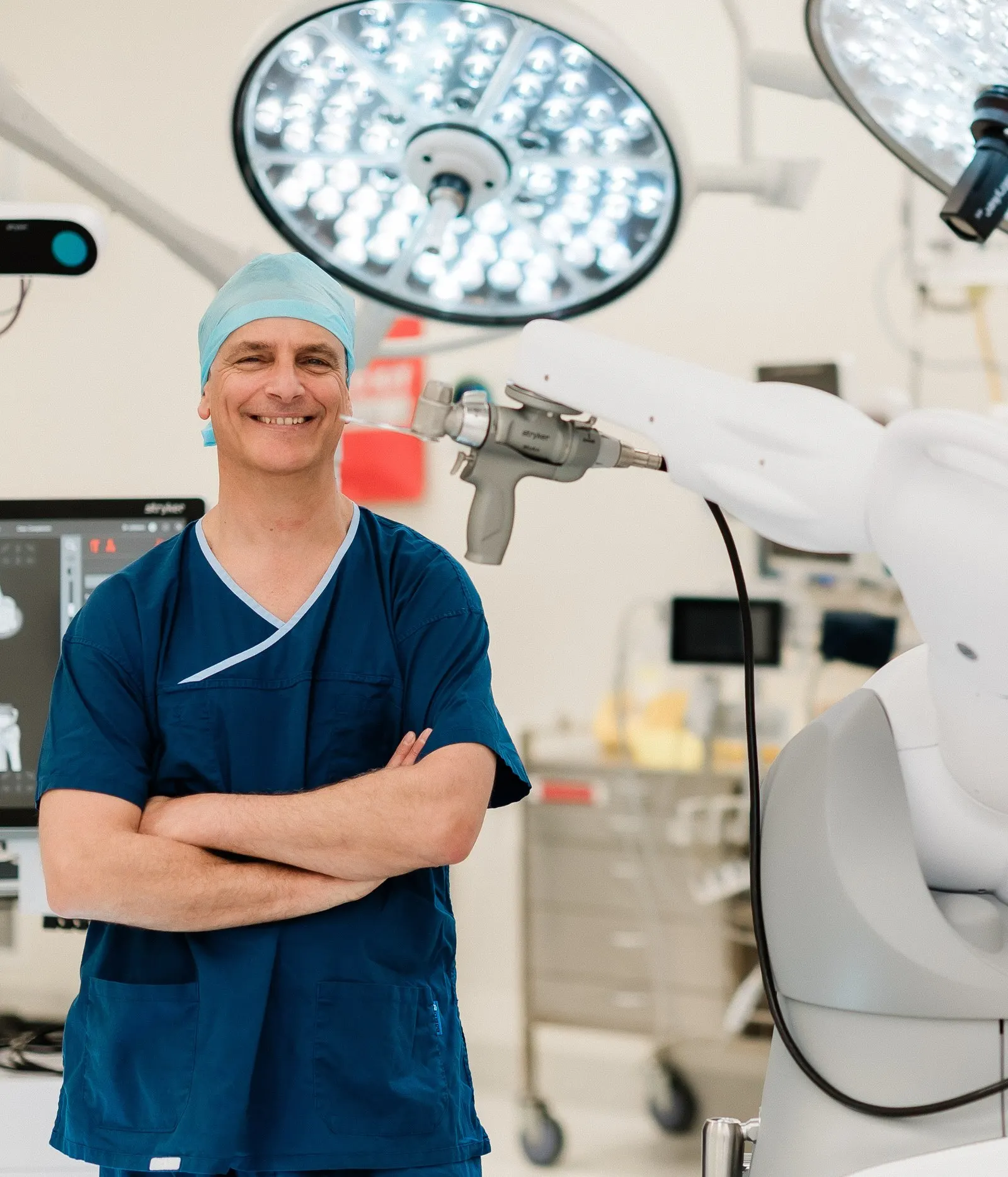
Mako robotic-arm assisted anterior total hip replacement combines a muscle-sparing anterior surgical approach with CT-based three-dimensional planning. The worn ball-and-socket surfaces of the hip are replaced with prosthetic components.
- Approach
- Anterior, muscle-sparing
- Planning
- CT + functional
- Hospital stay
- ~3 nights
- A typical stay — this varies from patient to patient.
- Recovery
- Most within 6 weeks
- Continues over 3–6 months; individual recovery differs.
These figures are a general guide only. Recovery and outcomes differ for every patient — Dr Limbers will discuss what to expect in your situation.
Overview
Hip arthritis is often mistaken for something else. The pain is usually felt in the groin rather than the outside of the hip, and it frequently refers down to the knee — which is why some people are investigated for a knee problem before the hip is identified as the cause.
Mako robotic-arm assisted anterior total hip replacement combines a muscle-sparing anterior surgical approach with CT-based three-dimensional planning. The worn ball-and-socket surfaces of the hip are replaced with prosthetic components.
Dr Limbers was among the first surgeons in Australia to use this technique and has performed a large series of Mako robotic anterior hip replacements.
When is hip replacement considered?
Total hip replacement is most commonly performed for advanced osteoarthritis. It may also be considered for avascular necrosis, inflammatory arthritis, developmental abnormalities such as hip dysplasia, post-traumatic arthritis and selected fractures.
Surgery is generally considered when pain, stiffness and loss of function remain substantial despite appropriate non-operative treatment.
What are the symptoms of hip arthritis?
- Groin pain, often deep and aching
- Pain referred to the thigh or knee
- Stiffness, particularly first thing in the morning
- Difficulty putting on shoes and socks, or cutting toenails
- Difficulty getting in and out of a car
- A limp
- Reduced walking distance
- Pain at night, and difficulty finding a comfortable position
What is the anterior approach?
The anterior approach reaches the hip from the front, through an intermuscular and internervous plane. This allows Dr Limbers to work between muscles rather than routinely dividing them.
The approach reduces early soft-tissue trauma and supports accelerated mobilisation. It also avoids the traditional movement precautions commonly used after some posterior-approach hip replacements.
Anterior vs. posterior hip surgery approach
Both approaches replace the same joint with the same types of implants; they differ primarily in how the surgeon reaches the hip.
The anterior approach works between natural muscle planes at the front of the hip rather than routinely detaching the muscles and tendons used to access the joint through a traditional posterior (rear) approach. For suitable patients, this can mean less early soft-tissue trauma, less pain and a faster return to walking and everyday activities during the first several weeks. Longer-term studies generally show that the functional differences between anterior and posterior approaches become smaller with time, with broadly similar outcomes by six-to-twelve months.
The posterior approach remains a well-established and highly successful technique. However, because the hip is accessed through structures at the back of the joint that contribute to stability, these tissues need to heal following surgery. Some surgeons therefore recommend temporary precautions such as avoiding deep hip flexion, crossing the legs or particular sleeping positions during the early recovery period. Posterior-approach dislocation has historically also been an important consideration, although modern repair techniques, larger femoral heads and contemporary rehabilitation protocols have reduced this risk considerably.
The anterior approach has its own specific considerations. Irritation of superficial nerves near the incision can cause numbness or altered sensation on the outer thigh. This usually improves but can occasionally persist. The operation can also be technically more demanding in some patients, including those with particular anatomy or greater soft-tissue depth around the hip.
Dr Limbers' anterior approach generally does not require the traditional posterior hip precautions during the first six weeks. The most appropriate approach nevertheless depends on the individual patient, their anatomy and the surgeon's experience with the technique.
What is functional hip planning?
This is a distinctive part of Dr Limbers’ hip practice and is worth understanding.
The pelvis changes position as you move between standing and sitting. The spine and pelvis normally work together, but spinal stiffness or a previous spinal fusion can alter that movement. The resulting change in hip orientation may increase the risk of component impingement or instability after hip replacement.
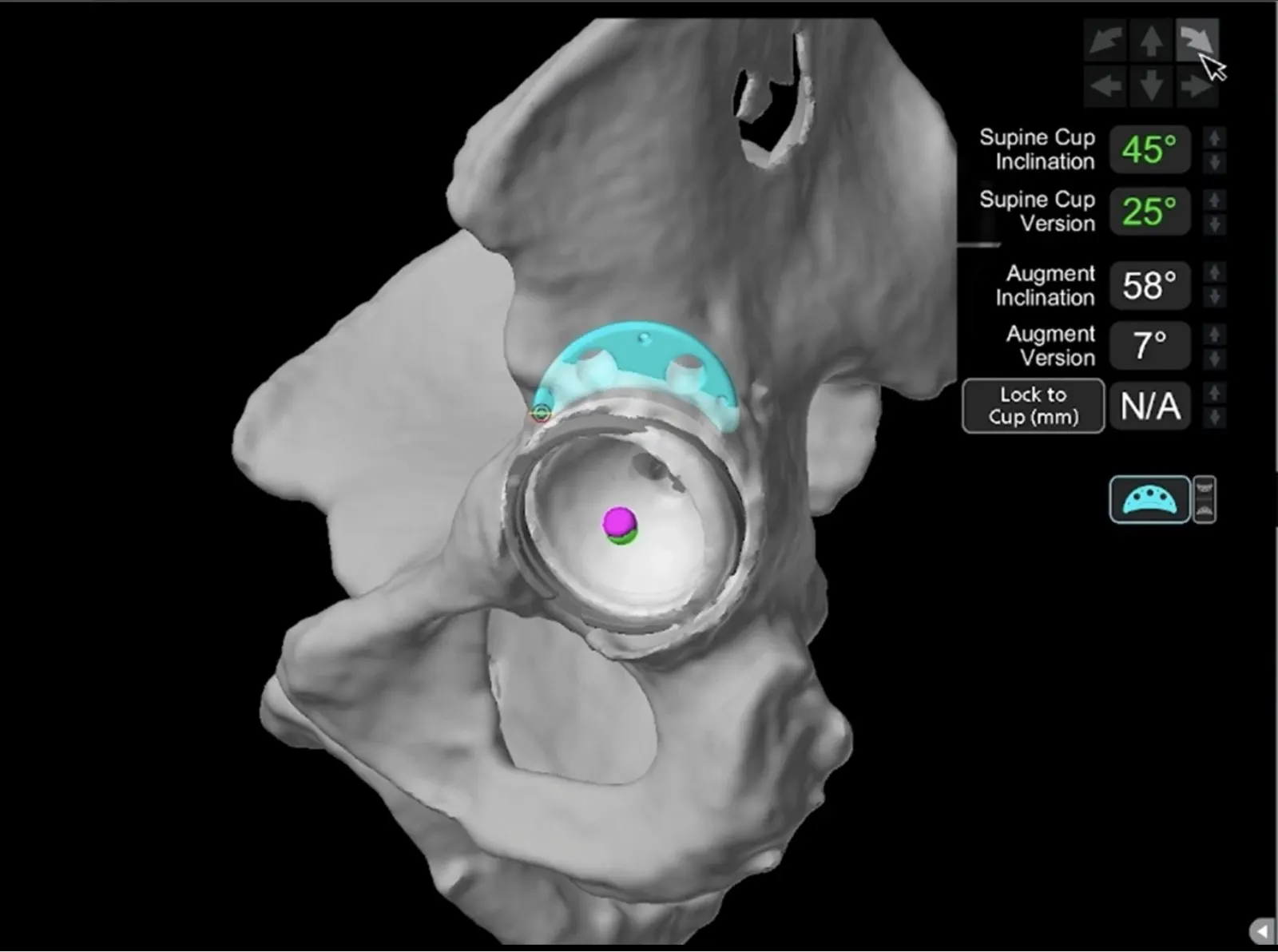
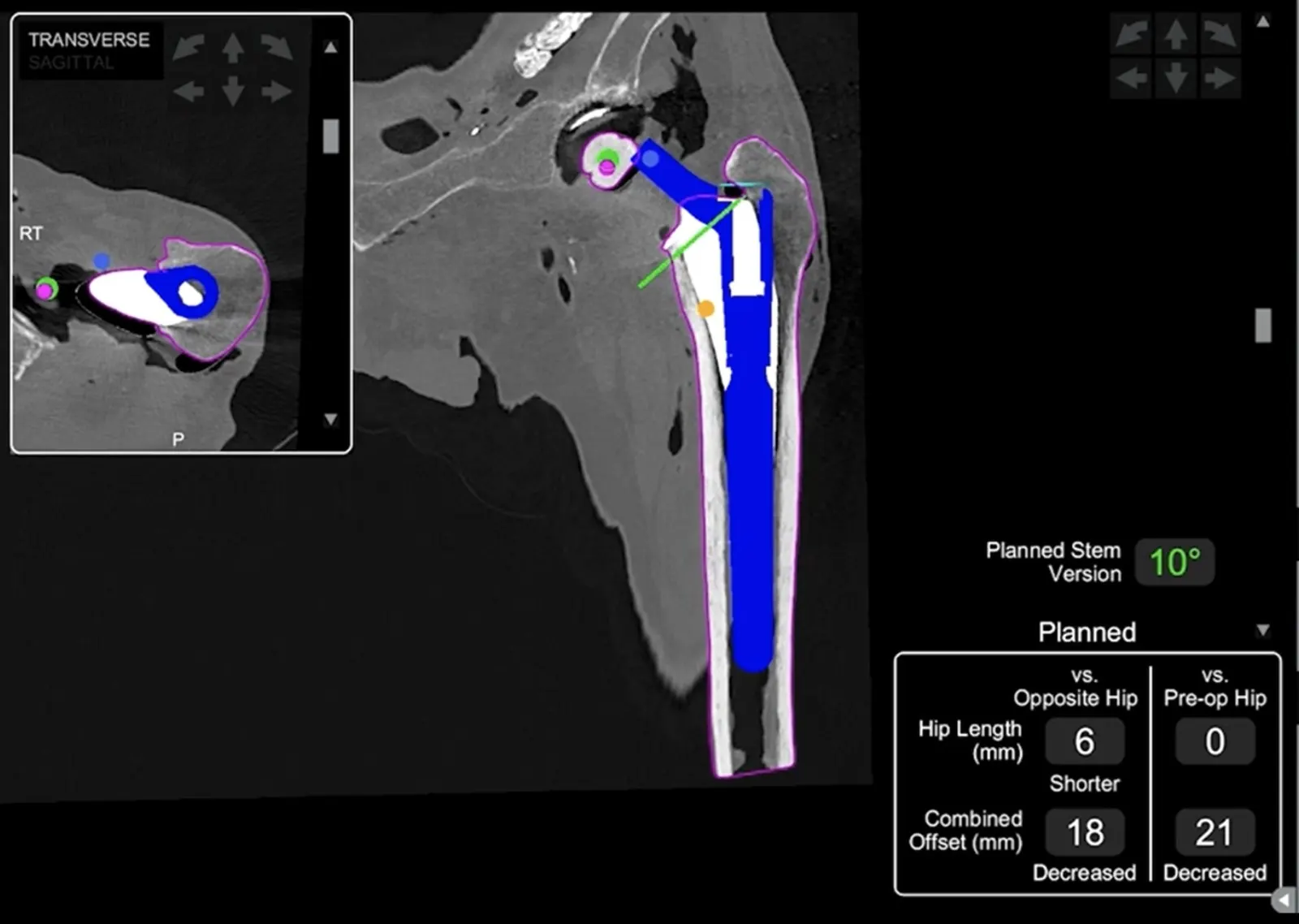
Dr Limbers will request standing and sitting spinal and pelvic X-rays as well as a CT scan to assess this relationship. The measurements are incorporated into the Mako plan so that proposed component positions are evaluated through functional standing and seated positions.
A virtual hip replacement can then be taken through a simulated range of motion before surgery. Where planning identifies a potential problem, the implant position or strategy is adjusted.
How is the operation performed?
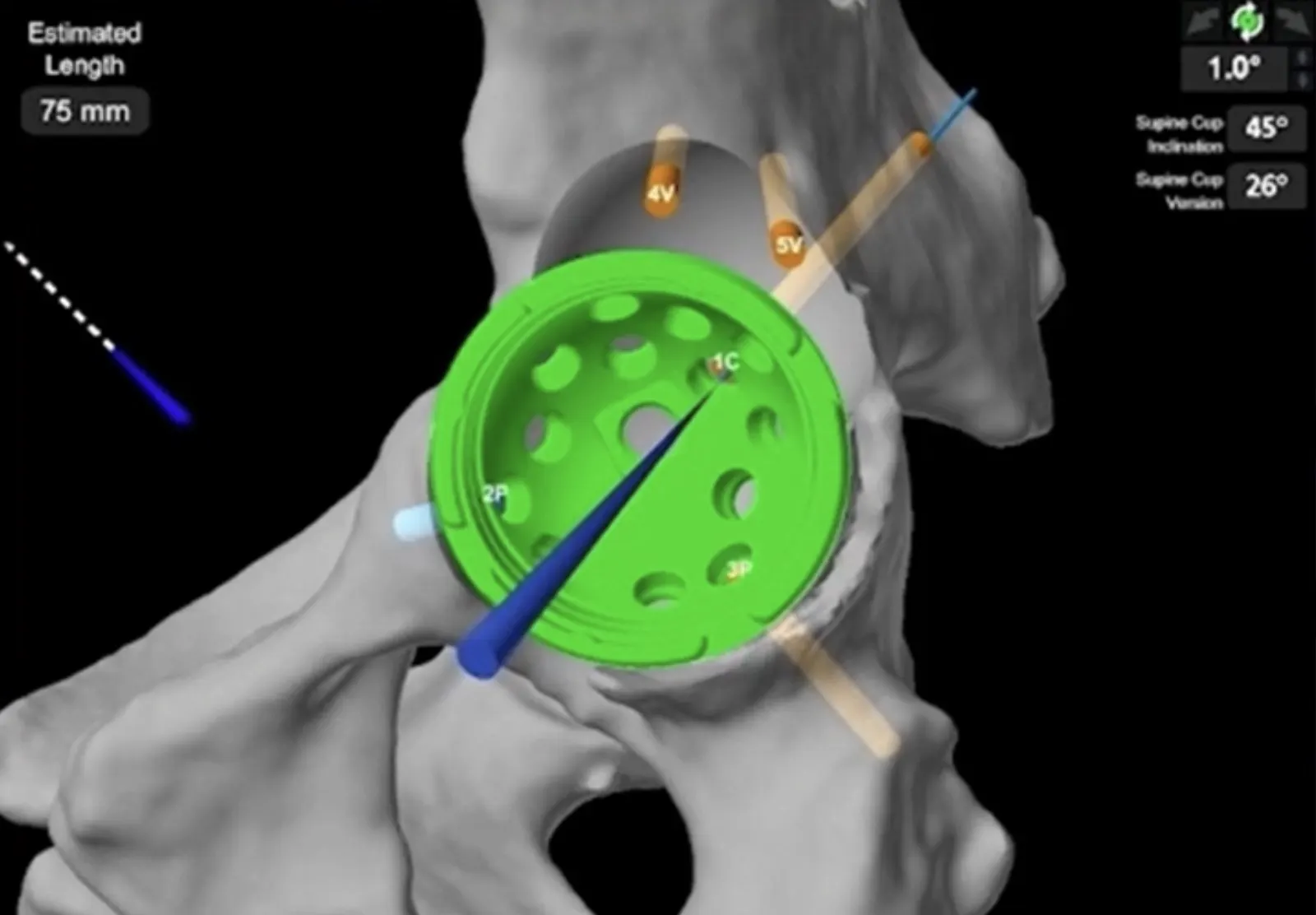
In theatre, Dr Limbers performs the anterior approach and places navigation reference pins. Your anatomy is mapped and matched to the CT-based model, and the pre-operative plan is checked and refined using information obtained during surgery.
The robotic arm assists with preparation of the acetabulum (the hip socket) within the planned area, with tactile, visual and auditory feedback guiding reaming and implant placement. The femur is then prepared and the components inserted.
The replacement generally includes a metal acetabular shell, a femoral stem, a ceramic or metal femoral head, and a polyethylene or ceramic liner depending on the implant construct selected.
Trial components are used to assess stability, movement, leg length and offset before the final implants are inserted. Local anaesthetic is infiltrated into the wound and a waterproof dressing applied.
What is recovery like?
Hospital stay is commonly around three nights, although it may be shorter or longer depending on medical health, mobility and home support. Some patients return home directly, while others require inpatient rehabilitation.
Most early recovery occurs during the first six weeks, with strength and endurance continuing to improve over three to six months.
Dr Limbers’ current anterior hip protocol does not routinely impose restrictions on sleeping position or hip movement during the first six weeks. This differs from the precautions commonly applied after posterior-approach hip replacement, and is worth knowing if you have been told about hip precautions previously or by another practitioner.
Driving is often possible after approximately two to three weeks, but only when you can safely control the vehicle, are no longer taking impairing medication and have been cleared to drive.
View the Anterior Total Hip Replacement Rehabilitation Protocol →
What are the risks?
Infection, blood clots, bleeding, fracture, dislocation, leg-length difference, nerve or blood vessel injury, ongoing pain, implant loosening or wear, anaesthetic complications and the need for further surgery. The anterior approach also carries approach-specific risks including numbness or irritation involving superficial nerves near the incision.
Your recovery
A typical timeline.
Day of surgery
Local anaesthetic is infiltrated into the wound and a waterproof dressing applied.
Days 1–3
Hospital stay is commonly around three nights; some patients return home directly, while others require inpatient rehabilitation.
Weeks 2–3
Driving is often possible after approximately two to three weeks — only when you can safely control the vehicle and have been cleared to drive.
6 weeks
Most early recovery occurs during the first six weeks, with no routine hip precautions in this period.
3–6 months
Strength and endurance continue to improve over three to six months.
The evidence
Is robotic technology of benefit?
30%
more acetabular cups positioned within the desired range of anteversion and inclination
in the robotically assisted cases, a statistically significant difference versus conventional total hip replacement in a comparative study.
The acetabular cup placement was examined in robotically assisted and conventional total hip replacement surgery in a comparative study. A statistically significantly higher number (30% higher) of acetabular cups were positioned within the desired range of anteversion and inclination in the robotically assisted cases.
Thus, the early data for robotic unicompartmental knee replacement and robotic total hip replacement is encouraging.
Point of difference
Why Dr Limbers for anterior hip replacement.
Anterior approach performed with Mako robotic assistance
Functional hip planning, assessing the hip–spine relationship before surgery
No routine hip precautions in the first six weeks
Among the first Australian surgeons to adopt Mako robotic anterior hip replacement
Fellowship training at Addenbrooke’s University Hospital, Cambridge, and Cappagh National Orthopaedic Hospital, Dublin

Key orthopaedic surgical experience
Dr Limbers was among the first surgeons in Australia to perform Mako robotic-assisted anterior total hip replacement and has performed a large series of these procedures. His fellowship training in hip and knee replacement was undertaken at two high-volume international centres.
Read moreRead less
Common questions
Anterior hip replacement, answered.
Will I have hip precautions after surgery?
Dr Limbers’ current anterior hip protocol does not routinely impose restrictions on sleeping position or hip movement during the first six weeks. Your individual instructions take precedence.
When can I drive after anterior hip replacement?
Often after approximately two to three weeks, provided you can safely control the vehicle, are no longer taking impairing medication and have been cleared to drive.
How long will I be in hospital?
Commonly around three nights, though this varies with medical health, mobility and home support.
Will my legs be the same length?
Leg length is planned before surgery and assessed directly during the operation, which is one advantage of operating with the patient on their back. Small differences can still occur and are usually not noticeable.
What if I have had spinal fusion or a stiff back?
This is exactly the situation functional hip planning addresses. Standing and sitting X-rays allow the hip–spine relationship to be assessed and the implant position adjusted accordingly.
Last reviewed October 2026
Sources3 references
- Australian Orthopaedic Association National Joint Replacement Registry (AOANJRR): https://aoanjrr.sahmri.com
- Healthdirect; Hip replacement: https://www.healthdirect.gov.au/hip-replacement
- Australian Institute of Health and Welfare (AIHW); Osteoarthritis: https://www.aihw.gov.au/reports/musculoskeletal-conditions/osteoarthritis
Book an Appointment Today
If hip or knee pain is impacting your quality of life, Dr Limbers can assess whether joint replacement or another treatment option is appropriate for you.
Appointments are available at Wahroonga on the North Shore, and at North Gosford and Kanwal on the Central Coast. A current referral is generally requested and allows eligible Medicare patients to claim the relevant rebate.